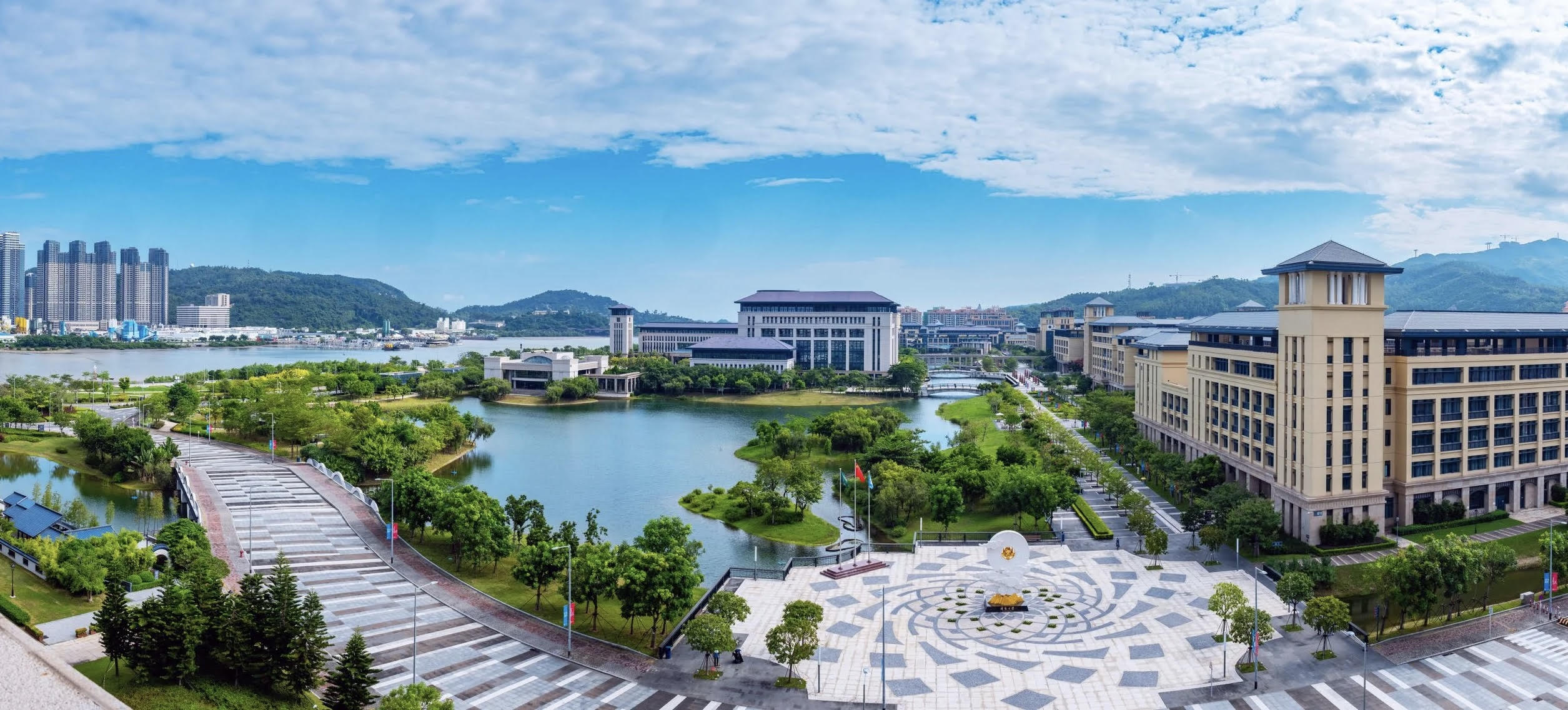
Image credit: University of Macau
Tides of Fortune: Luck, Risk, Speculation
University of Macau
21–23 July 2027
Across inter-Asia, fortune (whether as luck, as wealth, as fate) has become central to the processes of Asian modernity: speculative capital reshapes cities, labor, and intimacies, while algorithmic systems promise to render uncertain futures calculable. Fortunes are made and lost in these circuits, and they are unevenly dispensed. These tides of fortune also encompass cycles of boom and bust, along with the risks and contradictions they produce. Yet speculation, while undeniably tethered to the structures of capital, also names the work of imagination. To speculate is to stake a claim to a future, a form of imagination as available to the dispossessed, who have every reason to imagine otherwise, as to the investor. The conference is interested in both senses of the term “fortune,” and in what happens where they intersect and collide.
As a UNESCO-listed heritage port shaped by four centuries of interaction among South China, Southeast Asia, and the Lusophone world, Macau is also the world’s largest gaming economy. Fortune here is not a metaphor. Macau foregrounds the risks and contradictions of casino capitalism: a prolonged downturn shaped by wider geopolitical currents and by tighter regulation of cross-border capital flows; and the ways such pressures can intensify efforts to lower production costs through worsening conditions for migrant labor, greater extraction of finite natural resources, and the hyper-commercialization of preserved UNESCO heritage. We take this less as a claim to exceptionalism than as an invitation for comparison: we hope participants will read Macau against the other Asian cities where fortunes are made, and inter-Asia against the wider South.
IACS 2027 invites inquiry into how lives, communities, and futures are won and lost across inter-Asia, and into how people navigate conditions of chance. We welcome reflections on luck, risk, aspiration, and precarity as cultural forms, and on what remains when nothing is guaranteed. The sub-themes below are indicative rather than exhaustive. They sketch out the terrain the conference expects to cover without foreclosing what else might be brought to it. Proposals that depart from, challenge, or extend these terms will be read with equal interest.
SUB-THEMES
1. Games of Chance: Casino Capitalism and Its Lifeworlds
- Gambling as economy, as urban form, and as everyday life
- The labor on the casino floor
- Regulation, licensing, and the state’s stake in chance
- Hospitality, entertainment, and the intimate economies that surround the casino floor
- The social worlds around and against the casino industry
2. Speculative Commons
- Collective forms under conditions of uncertainty
- Rotating credit associations, mutual aid societies, cooperatives
- Remittance chains and informal insurance
3. Algorithmic Fortunes
- Fortune-telling machines old and new
- Predictive systems, credit scoring, recommendation, and risk modeling
- Divination and technology
4. Racialized Migrant Fortunes: Mobility, Aspiration, Labor, Precarity
- Migration as a wager on the future
- Racialized, ethnicized, and nationalized regimes of mobility and belonging
- Remittance economies and the households they sustain
- Domestic and care work
- Youth aspiration and the deferral of futures
- Brokerage, debt, and the infrastructures of leaving
- Visa dependency, deportability, and the uneven capacity to refuse
- Uncertain futures
5. Archipelagic Currents: Crossings and Circulations
- Maritime routes and port cities
- The traffic and crossings between them
- Tidal and oceanic figures of connection
- The archipelago as method
6. Heritage in Speculative Times
- Conservation as investment
- Heritage economies and tourism
- Colonial architecture
7. Risk and the City: Speculative Urbanism
- Property and development as instruments of speculation
- Land reclamation and mega-projects
- Displacement, dispossession, and the right to the city
8. Fortune in Literature, Film, and Popular Media
- Gambling and heist genres
- Lottery and get-rich narratives
- Melodrama, fantasy, and the popular imagination of chance
- Fortune as narrative form: plot, coincidence, and fate
9. Affective Economies: Hope, Anticipation, Uncertain Futures
- Structures of feeling attached to uncertain futures
- Cruel optimism and the attrition of hope
- Forms of emotional labor
- Living toward an uncertain future
10. After Bandung: South–South Futures
- Bandung’s wager and its afterlives
- Afro-Asian and South–South relations
- Non-alignment and its legacies
- Lusophone and Sinophone circuits across Asia, Africa, and Latin America
11. Ecologies of Risk
- Environmental futures as speculative objects
- Extraction, reclamation, and resource frontiers
- Climate risk, insurance, and adaptation
- The uneven distribution of ecological fortune
12. Gendered Fortunes: Labor, Care, Vulnerability
- How fortune is gendered in its making and its bearing
- Reproductive and care labor
- Reproductive futurity
- Intimacy as industry: sexualized labor and economies of desire
- Harassment, institutional power, and gendered precarity at work
13. Generational Fortunes: Youth, Aspiration, Uncertain Futures
- Education as investment and the credential wager
- Youth unemployment, waithood, and delayed adulthood
- Gaming, esports, and speculative digital economies
- Generational inequality and inherited precarity
14. Diasporic Fortunes: Dispersal, Return, Obligation
- Dispersal and settlement across inter-Asia
- Homeland economies and diasporic investment
- Ancestral property and inheritance
- Familial obligation across borders
- Second- and third-generation belonging; Macanese and Lusophone diasporas
SUBMISSION FORMATS
We invite proposals in four formats. Following the Society’s practice, we strongly encourage organized sessions rather than individual submissions, and we particularly welcome sessions that bring together participants who would not ordinarily meet on the same panel.
- Organized Cluster. A three-hour workshop session of six to ten participants, built around a shared problem. A complete list of presenters is not required at proposal stage.
- Organized Panel. A ninety-minute session of three to four panelists, with a chair.
- Roundtable. A ninety-minute discussion of three to six contributors. Paper abstracts are not required.
- Individual Paper. Accepted papers will be grouped into panels by the Programme Committee.
Double sessions may be requested for Clusters (six hours, more than eight participants) and Panels (three hours, more than six participants). Please explain briefly in the proposal how the additional time would be used. Requests will be considered case by case.
For Organized Clusters, a complete list of presenters is not required when you apply. Once a Cluster is accepted, organizers will have a further window in which to issue their own Call for Panelists and confirm participants. See Key Dates below.
ROLES
Proposals for the first three formats must designate an Organizer, a Chair, and the Presenters. The Organizer may also serve as Chair or Presenter, and the Chair may also be a Presenter. Including a Discussant is optional.
An individual may not present more than one paper, though a person may hold more than one role in the conference. Plenary and keynote sessions do not count as a paper for this purpose.
The conference is in person only. We regret that we do not have the capacity to support online participation.
INNOVATIVE PROPOSALS
We support proposals that will stimulate discussion beyond conventional paper presentations, and the Programme Committee has been asked to read such proposals generously. Some possibilities:
- A session built around a single major paper, film, or book
- A performance or a reading of a creative work, followed by discussion
- A workshop of works-in-progress with commentators
- A debate on interpretations or methodologies
- An exploration of inter-Asian teaching materials
- A conversation with activists, curators, exhibitors, or filmmakers
Proposals of this kind should be submitted as Organized Clusters, Panels, or Roundtables, whichever best fits the form, and the proposal description should make the format clear.
DIVERSITY AND EQUITY
We are committed to diversity and equity. We expect panel submissions to demonstrate diversity in gender, institution, nationality, and professional role, including graduate students, junior and senior scholars, and practitioners from outside the academy. We strongly urge Asia-based early-career scholars from diverse backgrounds to reach out, get organized, and apply.
LANGUAGE
Proposals must be submitted in English, the conference language of operation. A presentation in an Asian language can be accommodated under the following conditions:
- The scholar has difficulty presenting in English
- The scholar’s research significantly enriches the conversation
- A summary of the presentation will be made available in English
- The Organizer or Chair is prepared to facilitate the exchange of ideas through translation and interpretation
This option is not available for Individual Papers.
HOW TO SUBMIT
All proposals are submitted through the conference management platform, at the address to be announced.
Please have the following ready:
- Proposal title
- Preferred format: Organized Cluster, Organized Panel, Roundtable, or Individual Paper
- Sub-theme: select one of the fourteen above, or Open Panel if none applies
- Session abstract or description: 250 words maximum
- Paper title and abstract: 200 words maximum, per paper. Not required for Roundtables or for innovative sessions without paper presentations
- Personal information for each participant: first and last name, email address, affiliation, position, gender, nationality, and current location (city and country, not a full address)
- Up to five keywords
Questions may be directed to the IACS 2027 Secretariat once the email address is announced.
KEY DATES
- 15 January 2027. Deadline for all proposals.
- 15 February 2027. Notification of results to Organizers and individual applicants.
- 15 March 2027. Cluster Organizers confirm their full list of participants.
- 31 March 2027. Early-bird registration closes.
- 30 June 2027. Registration closes.
- 21–23 July 2027. Conference convenes at the University of Macau.
Cluster Organizers will receive a further set of instructions with their notification. We draw attention to the sequence of the middle three dates: the early-bird registration rate closes on 31 March 2027, and that date is fixed. Cluster participants confirmed by 15 March will therefore still be able to register at the early-bird rate, and we would encourage them to do so promptly.
REGISTRATION
Registration fees are set in US dollars on a five-tier scale determined by country or region of affiliation, ranging from USD 70 to USD 180. Members of the Inter-Asia Cultural Studies Society receive a discount, as do all registrants who register before the early-bird deadline. Graduate students and independent scholars without institutional support are eligible for a reduced rate. Full details are on the conference website.
CONTACT
IACS 2027 Organizing Committee
Department of English, Faculty of Arts and Humanities
University of Macau, Avenida da Universidade, Taipa, Macau
Email: To be announced.
Conference website: To be announced.
Hosted by the Faculty of Arts and Humanities, University of Macau, in partnership with the Inter-Asia Cultural Studies Society. Conference management by UMTEC Limited.